
If you’ve ever had a student burst into tears over a broken pencil or get so frustrated they can’t keep working, you know this truth:
Kids need tools to handle big feelings.
Social-emotional learning (SEL) is more than a buzzword—it’s an essential part of building a positive, supportive classroom. When students learn how to recognize emotions and use calming strategies, they feel safer, more confident, and ready to learn.
Today, I want to share some of my favorite ways to teach SEL skills in the classroom—and give you a free printable toolkit you can start using right away.
💛 Why Teaching Self-Regulation Matters
Self-regulation is a skill that takes time (and practice) to develop. Even adults sometimes struggle to pause and think before reacting!
When we teach students how to:
✅ Notice what they’re feeling
✅ Name their emotions
✅ Choose a healthy way to cope
…we’re setting them up for success far beyond the classroom.
🌟 3 Simple Strategies to Help Students Self-Regulate
Here are a few techniques I’ve used with my students over the years:
1️⃣ Feelings Check-Ins
Start the day or a lesson by asking students to share how they’re feeling. This can be as simple as pointing to an emoji chart or writing a feeling word on a sticky note.
2️⃣ Calm-Down Corners
Create a cozy space with tools students can use when they feel overwhelmed—like stress balls, breathing cards, or reflection sheets.
3️⃣ Reflection Time
After big emotions, give kids a chance to think about what happened and what might help next time. This can turn a difficult moment into a learning opportunity.
✨ Grab Your Free SEL Mini Toolkit
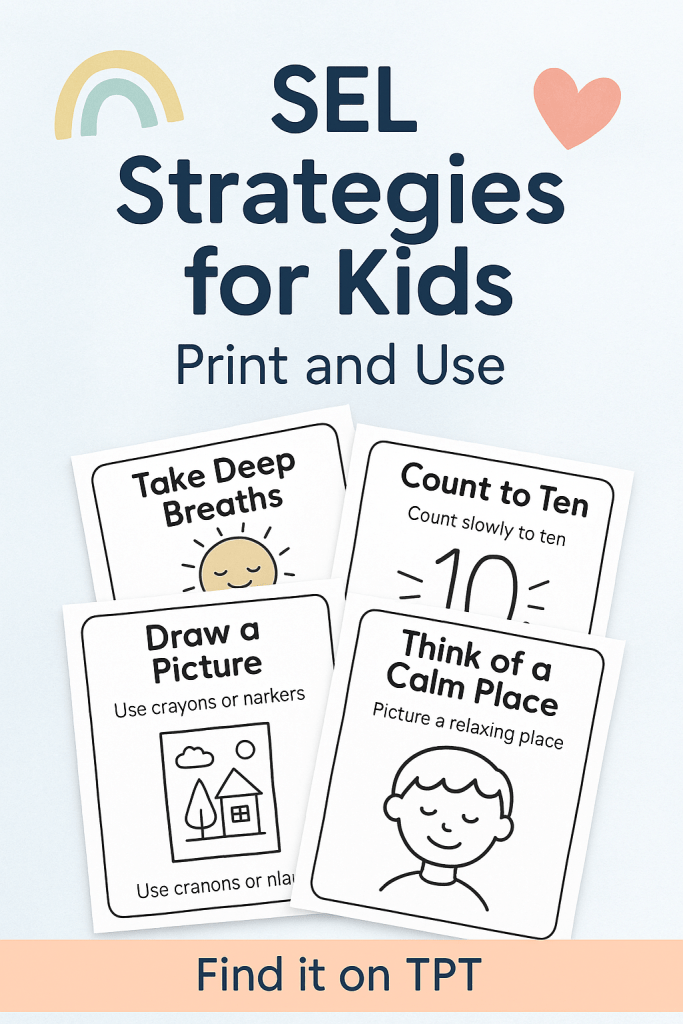
To help you get started, I’ve created a FREE printable SEL Mini Toolkit with:
✅ A Feelings Check-In Sheet
✅ Calming Strategy Cards
✅ A Reflection Page
These printables are perfect for calm-down corners, morning meetings, or one-on-one support.
👉 subscribepage.io/hm89J8
🌱 More SEL Resources
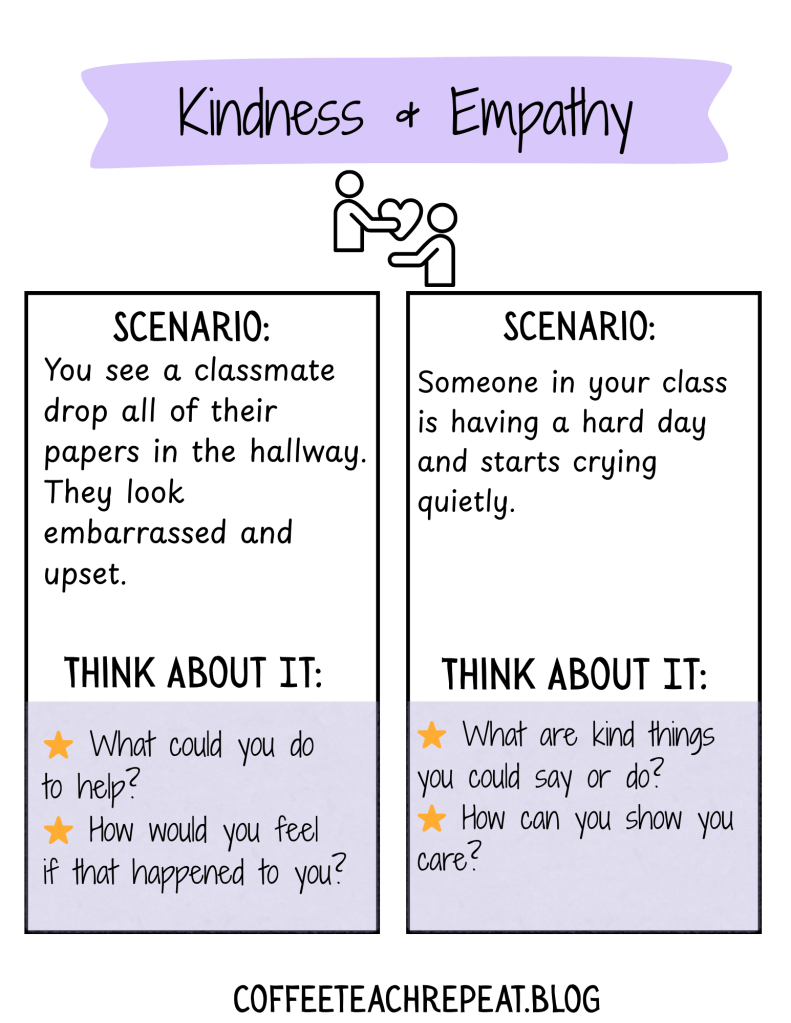
If you find these helpful, be sure to explore my other SEL resources for K–3 classrooms, including scenario cards, daily check-ins, and more.
Together, we can make social-emotional learning an everyday part of our classrooms—and help kids build skills that will serve them for life.
 coffee.TEACH.repeat