

From Classroom to Coaching: A New Chapter

After eighteen years in the classroom, I packed up my baskets of books, my anchor charts, and all the tiny treasures that made my room feel like home. Then I did something I never thought Iโ€™d doโ€”but always wanted to.
I stepped out of the classroom and into a brand-new role as an instructional coach.

Itโ€™s only been a month and Iโ€™m still finding my footing. If I’m being honest- that footing is very wobbly at best. Iโ€™m learning new acronyms, new systems, and new ways to support teachers who are balancing more than ever. Iโ€™ve caught myself reaching for a read-aloud or a stack of math manipulatives more than onceโ€”old habits die hard!

But underneath all the newness is something deeply familiar: my love for teachers and for the incredible work that happens in classrooms every single day.


Why Iโ€™m Writing Again

When I first started Coffee Teach Repeat, my focus was social-emotional learning and creating resources to help teachers build strong classroom communities. Those ideas still sit at the heart of everything I do.

Now, though, I’m looking through a new lens.
I see know how much teachers give, how hard they work to meet expectations that keep changing, and how much they deserve advocates who understand what it really feels like to teach right now.

Thatโ€™s why Iโ€™m bringing the blog backโ€”not as a โ€œhow-toโ€ guide from an expert (because I’m no expert) , but as a reflection journal from a learner.
A place to share what Iโ€™m discovering as I move from classroom teacher to instructional coach, and hopefully to offer a little encouragement along the way.


What to Expect in This Series

Over the next few months, Iโ€™ll be writing a series called From Classroom to Coaching.
Each post will explore one part of this transitionโ€”what Iโ€™m learning, what Iโ€™m missing, and what Iโ€™m realizing about how to truly support teachers.

My hope is that these posts make you feel seen, whether youโ€™re still in the classroom, leading one, or somewhere in between. And who knows- maybe I can offer some great advice or resources along the way.


For the Teachers Reading This

Youโ€™re the reason Iโ€™m here.
Youโ€™re the heart of every story, strategy, and reflection Iโ€™ll share.

If no oneโ€™s told you lately: your work matters. You matter.
And there are peopleโ€”like meโ€”cheering you on from right down the hall.
A Simple SEL Routine That Builds Connection in Under 5 Minutes a Day

Back-to-school season is the perfect time to set the tone for connection and emotional safety in your classroom. One simple but powerful tool Iโ€™ve used over the years is the student check-in โ€” a quick, intentional moment that helps kids pause, reflect, and feel seen.

Whether youโ€™re building your classroom community from scratch or looking to strengthen your existing routines, incorporating daily and weekly check-ins can make a big difference in how students show up, both emotionally and academically.


Why Use Student Check-Ins?

Student check-ins create space for:

  • ๐ŸŒŸ Self-awareness โ€“ Students begin to notice and name their emotions.
  • ๐Ÿ’ฌ Student voice โ€“ They know their feelings matter and are heard.
  • ๐Ÿง˜โ€โ™€๏ธ Emotional regulation โ€“ A consistent routine helps them manage ups and downs.
  • ๐Ÿค Classroom community โ€“ Students learn that everyone has good days and hard days.

Best of all? They donโ€™t take long โ€” just a few minutes a day!


Whatโ€™s Inside the Editable Student Check-In Toolkit

I created this toolkit to make it easy for teachers to get started (or to level up their existing SEL routines). It includes both daily and weekly check-in templates that are simple, age-appropriate, and completely editable to meet your studentsโ€™ needs.

Hereโ€™s whatโ€™s included:

โœ”๏ธ Daily check-in slips (with and without prompts)
โœ”๏ธ Weekly reflection forms to support goal setting
โœ”๏ธ Google Slides and printable PDF versions
โœ”๏ธ Fully editable fields for total flexibility
โœ”๏ธ Simple, student-friendly design
โœ”๏ธ Great for calm down corners, morning meetings, or independent work time


How I Use This in My Classroom

I love using the daily check-in as a soft start to our morning. Students grab a slip, circle how theyโ€™re feeling, and add a sentence or doodle to share more. On Fridays, we shift to the weekly reflection โ€” where students choose one thing theyโ€™re proud of or set a goal for the week ahead.

Iโ€™ve found that giving students regular opportunities to check in helps build trust โ€” not just with me, but within the classroom as a whole. It normalizes emotions and opens the door for meaningful conversations.


Tips for Making It Work in Your Routine

  • ๐Ÿ’ก Model first: Share your own example as a morning check-in.
  • โฑ๏ธ Keep it quick: This doesnโ€™t need to take more than 5 minutes.
  • ๐ŸŽจ Give choice: Let students write, draw, or choose emojis.
  • ๐Ÿ—‚๏ธ Collect or keep private: Some teachers collect check-ins; others let students keep them in folders or journals.
  • ๐Ÿงฉ Use for small groups: These check-ins can also help you decide who might need a quick one-on-one or a calming strategy.

Ready to Try It?

If youโ€™re looking for a simple way to boost SEL and build student connection, the Editable Student Check-In Toolkit is ready to go. Just print or assign it in Google Slides โ€” and youโ€™ve got an easy-to-use tool that supports emotional wellness all year long.

๐Ÿ‘‰ Grab the Check-In Toolkit on TPT

On Pinterest? Pin it for later!

https://pin.it/6oM2ZtFzb

I’d love to hear other ideas How do you help students manage their emotions?

8 Powerful SEL Picture Books to Use in Your Elementary Classroom + Grab Your Freebie Reflection Form

Social-emotional learning (SEL) plays a critical role in helping students navigate emotions, build relationships, and grow into compassionate individuals. One of the most powerful ways to introduce SEL concepts in an elementary classroom is through picture books.

Here are eight impactful SEL read-alouds, complete with themes and lesson ideas, that can spark meaningful conversations with your students. After reading, put some of these reading reflection forms in your calm down corner. Students can use them to implement SEL skills into their daily life and routine.


1. The Invisible Boy by Trudy Ludwig

Theme: Inclusion, empathy, kindness
This heartwarming story follows Brian, a quiet boy who often feels invisible until a new student shows him kindness.
Classroom Idea: Create a class discussion around โ€œinvisibleโ€ moments and how small acts of inclusion can make a big difference.


2. Don’t Think About Purple Elephants by Susan Whelan

Theme: Anxiety, calming strategies
A story about a girl whose worries come at night, until her mother offers an imaginative way to cope.
Classroom Idea: Teach students how to redirect worry thoughts by imagining something silly or comforting.


3. My Magic Breath by Nick Ortner & Alison Taylor

Theme: Mindfulness, breathing techniques
This interactive book encourages kids to use their breath to manage feelings and calm down.
Classroom Idea: Introduce this during morning meetings or before tests as a mindfulness routine.

Art connection: Make a class book where students draw their own “magic breath”- put it in the calm down corner for students to look at when needing a minute to calm down.


4. Enemy Pie by Derek Munson

Theme: Friendship, conflict resolution
A clever dad helps his son turn an โ€œenemyโ€ into a friend using a secret recipeโ€”Enemy Pie.
Classroom Idea: Have students write a recipe for friendship or role-play conflict resolution strategies.


5. After the Fall by Dan Santat

Theme: Resilience, overcoming fear
Find out what happens to Humpty Dumpty after his great fallโ€”an inspiring tale of bravery and perseverance.
Classroom Idea: Connect this book to growth mindset lessons or journal about a time students overcame fear.


6. Those Shoes by Maribeth Boelts

Theme: Gratitude, needs vs. wants
Jeremy wants trendy shoes like his classmates, but ultimately discovers kindness and generosity are more important.
Classroom Idea: Use this to open discussions about empathy, giving, and recognizing privilege.


7. Each Kindness by Jacqueline Woodson

Theme: Regret, kindness, missed opportunities
This powerful book shows how one girlโ€™s missed chance to be kind stays with her.
Classroom Idea: Reflect on the ripple effect of kindness with writing prompts or class challenges.


8. The Bad Seed by Jory John

Theme: Behavior, self-perception, change
A funny but touching story about a seed who believes he’s “bad,” and how he chooses to change.
Classroom Idea: Use it to discuss labeling, growth, and making positive choices every day.


๐Ÿ“˜ Make SEL Meaningful with Read-Alouds

These picture books offer more than just storiesโ€”they open the door to deeper conversations, reflection, and classroom community building. Whether you’re doing morning meetings or SEL mini-lessons, these titles fit naturally into your routine.


๐Ÿ”— Amazon Affiliate Links

Want to grab these books for your classroom? Check them out here:

After reading: Use this reading reflection sheet. Students can respond and reflect on the books you use in the classroom to help teach those important SEL skills.

Do you have any great picture books that you use to teach SEL strategies in your classroom? Share them with us- we always love to see what other teachers are doing in their classrooms.

My Go-To Tool for Supporting Emotional Regulation in the Classroom

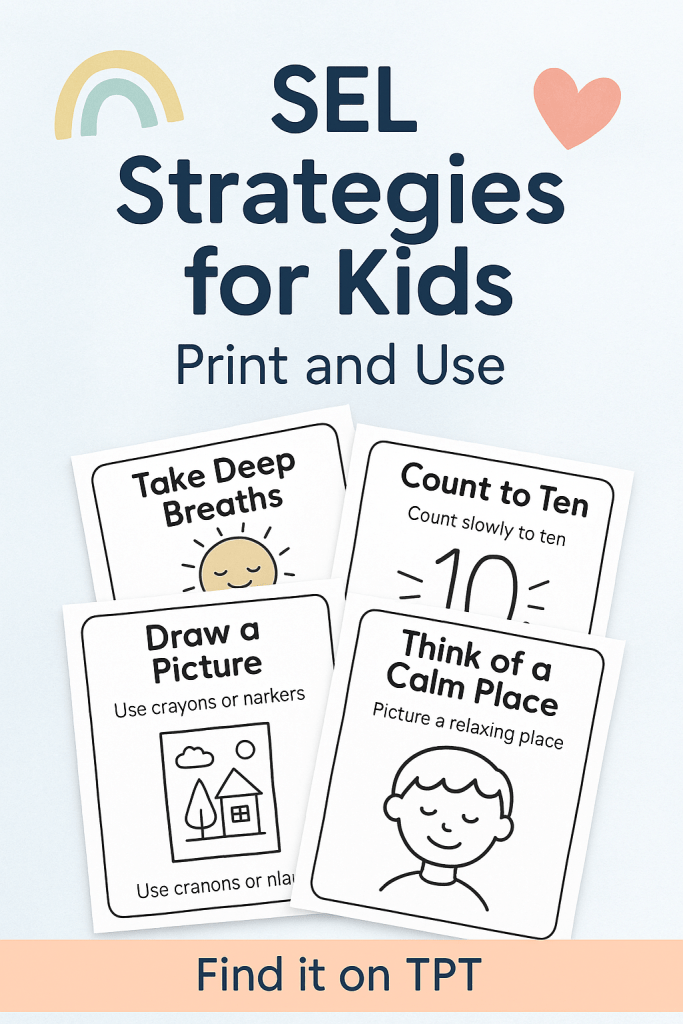
Teaching emotional regulation is just as important as teaching reading or math โ€” especially in the early grades. I created these SEL strategy cards to give students concrete, visual tools to help manage their feelings when emotions start to take over.

Whether theyโ€™re feeling overwhelmed, frustrated, or just need a moment to reset, these cards help guide students to use calming strategies independently.


๐Ÿ’ก Whatโ€™s Inside the SEL Strategy Cards Set

This printable resource includes:

  • โœ… calming strategies in student-friendly language
  • โœ… Categories like breathing, movement, visualization, and positive self-talk
  • โœ… A calm, clean design with hand-drawn style icons
  • โœ… An instruction page to help you introduce the cards with confidence

๐Ÿงบ How I Use Them in My Classroom

I introduce the cards during our class meetings and model how to use them. We role-play different scenarios and talk about how each strategy helps. Once students are familiar, I place the cards in our Calm Down Corner along with a few quiet tools like crayons, stress balls, and a timer.

The best part? Students now know what to do when they need a moment โ€” and they don’t need to ask me for help every time.


๐Ÿซ Other Ways to Use These Cards:

  • โœ… Morning meetings or SEL mini-lessons
  • โœ… Small group counseling
  • โœ… Pre-teaching strategies before a tough test or transition
  • โœ… Substitute or independent work time SEL centers

๐Ÿ“ฅ Grab Your Set of SEL Cards

You can grab the full set of SEL Strategy Cards for Kids in my Teachers Pay Teachers store.

๐Ÿ‘‰ Click here to get the SEL cards on TPT!

Just print, laminate, and use them all year long to support your studentsโ€™ emotional growth.

๐Ÿ“Œ Save This for Later

Pin the image below to your SEL or classroom management board so you donโ€™t forget it!


๐Ÿ“Œ Check out my Pinterest Page for more SEL strategies

Why I Teach Self-Reflection in the Elementary Classroom

As elementary teachers, we wear a lot of hats. We plan lessons, assess progress, meet diverse academic needs, and ensure students master grade-level standards. But one of our most importantโ€”and often overlookedโ€”roles is supporting the social and emotional growth of our learners.

Helping students understand their choices, emotions, and reactions is powerful work. When done consistently and with care, it can transform not just individual behavior, but the entire classroom climate. Iโ€™ve seen firsthand that the more time we invest in this kind of support, the more successful our students becomeโ€”not just as learners, but as people.

That said, teaching emotional regulation and reflection isnโ€™t easy. If youโ€™ve ever worked with a student in the middle of a meltdown or conflict, you know that teaching in the heat of the moment rarely works.

Thatโ€™s where self-reflection becomes essential.


๐Ÿ“ What a Reflection Form Is (and Isnโ€™t)

A reflection form is not a punishment.
Itโ€™s a toolโ€”a calm, structured way for students to pause and process what happened. The goal is to build self-awareness and emotional vocabulary, not shame or blame.


๐Ÿ•’ When I Use It

  • After a conflict or disruptive behavior
  • In calm-down corners, when students are ready to reflect
  • During restorative conversations
  • As a check-in tool for ongoing SEL support

๐Ÿ’ฌ What Iโ€™ve Noticed Since Using It

Since I started using reflection forms in my classroom, Iโ€™ve seen some amazing changes:

  • Students are better able to identify and express their emotions
  • There are fewer repeated behaviors
  • Iโ€™m having more restorative conversations instead of reactive ones
  • Students are becoming more aware of how their actions affect others
  • Our classroom community feels stronger and more connected

๐ŸŽ Try It in Your Classroom

Iโ€™ve created a simple, kid-friendly Student Reflection Form you can start using right away. Itโ€™s perfect for calm-down corners, behavior support, or SEL lessons.

๐Ÿ‘‰ Click here to grab the free reflection form

Letโ€™s help our students not just manage their emotionsโ€”but understand them.

Check out My TPT page for more SEL classroom tools as well .

The One Daily Activity That Changed My Classroom Culture


What brings me the most joy as a teacher?
Building a strong community of learners.

In my opinion, you canโ€™t expect students to do their best unless they feel safe, supported, and connectedโ€”not only to you, their teacher, but to each other. Thatโ€™s why I spend a lot (like… A LOT) of time intentionally building a classroom community.

Because when your students trust, value, and respect each other, you set the stage for truly meaningful learning to happen.


๐Ÿ’ฌ The Game-Changer: Question of the Day

Thereโ€™s one activity Iโ€™ve used for years that completely shifts the tone of my classroom:
Question of the Day.

Itโ€™s one of our favorite moments. The students canโ€™t wait to see what the question will be, and letโ€™s be honestโ€”they love any opportunity to talk about themselves. (Donโ€™t we all?)

At the beginning of the school yearโ€”or whenever you start this routineโ€”begin with light, low-stakes questions that are easy for everyone to answer. Think:

  • โ€œWhatโ€™s your favorite food?โ€
  • โ€œIf you could have any superpower, what would it be and why?โ€

These simple prompts help students feel safe, ease social anxiety, and give everyone a voice in a supportive environment. As the year goes on, you can begin to ask more thoughtful, reflective, or community-focused questions that relate to whatโ€™s happening in the classroom.


๐Ÿง  Examples of Thoughtful Questions:

Here are some of my go-to prompts that spark discussion and build connection:

  • โ€œWhat is something that currently brings you joy?โ€
  • โ€œOn a scale from 1 to 5 (1 = blah, 5 = AMAZING), how are you feeling today? Why?โ€
  • โ€œTell us something you donโ€™t think any of us know about you.โ€
  • โ€œTell us something goodโ€”anything!โ€
  • โ€œItโ€™s lunch time and you notice someone sitting alone looking sad. What do you do?โ€
  • โ€œWhat do you do when youโ€™re feeling worried? Share a tip that helps you relax.โ€

You can also use these moments to invite students into the decision-making process:

โ€œYesterday was really noisy during our work cycle and many people were distracted. Do you have ideas that might help us stay focused today?โ€

Giving students ownership over their classroom experience empowers them to take responsibility and builds community in real time.


๐Ÿช‘ What It Looks Like in My Classroom

We gather together once a day in a circle. Itโ€™s important to make sure everyone can see each other and make eye contactโ€”this small detail builds connection and encourages active listening.

We use a โ€œtalking ballโ€ to take turns speaking. It can be any soft item thatโ€™s easy to pass and signals who has the floor.

Here are a few of my favorites:

Using a visual cue like this makes turn-taking smoother and keeps the routine consistent and respectful.


โญ Key Takeaways

Even on the busiest daysโ€”when the schedule is full, time feels short, and youโ€™re juggling a thousand prioritiesโ€”make space for student voices. This practice will:

  • Help students feel seen and heard
  • Build peer empathy and understanding
  • Teach listening, turn-taking, and respectful conversation
  • And most importantly, create a classroom community that feels like a team

When students feel like they belong, everything elseโ€”academic engagement, behavior, motivationโ€”gets easier.

So go ahead. Add a Question of the Day into your morning meeting, closing circle, or transition time.
It might just become your favorite part of the day, too.

I can help you get started: check out my TPT page for some free samples and question ideas!